
Umbilical Cord Care and Bathing: A Simple, No-Panic Guide
Two of the most common first-time-parent questions have nothing to do with big medical decisions - they're about the umbilical cord stump and how often to bathe your baby. Both are simpler than they seem.
Cleaning the Umbilical Cord Stump
While the stump is still attached, the cleaning routine is genuinely straightforward:
- Cleanse around the edge with a mild soak of water
- Rinse it well
- Dry it thoroughly
That’s really it. (Some older routines included dabbing the area with alcohol to help it dry faster – practices have shifted over time, so check with your pediatrician on current guidance rather than what a previous generation may have done.)

Why It’s Not Rushed to “Fall Off” Faster
It might be tempting to want the stump gone as quickly as possible, but there’s actually a reason not to be in a hurry: for the first couple of weeks, the umbilical cord remnant can serve as emergency IV access if your baby ever needed to go to the hospital urgently. It’s a genuinely useful backup access point, not just a leftover to get rid of.
What’s Normal Underneath: The Umbilical Granuloma
Here’s what’s actually happening at that spot: the umbilical cord was your baby’s lifeline to the placenta, and where it detaches leaves behind something like a healing wound – a small hole in the belly that needs time to close on its own.
As it heals, you may notice red, slightly bumpy tissue at the site. This is called a granuloma, and it’s a completely normal part of healing – not an infection or a problem. It won’t be there permanently, and it may occasionally spot a small amount of blood if it gets rubbed by clothing. That’s not something to panic about either.
Umbilical hernias are also common and normal at this site, since it is, after all, a hole in the abdominal wall. A small portion of intestine can sometimes protrude slightly. This is typically left alone and monitored – most pediatricians won’t consider intervening until a child is around five years old, since the muscle wall usually closes and heals on its own well before then. The overwhelming majority of umbilical hernias resolve without any treatment at all.

How Often Should You Bathe a Newborn?
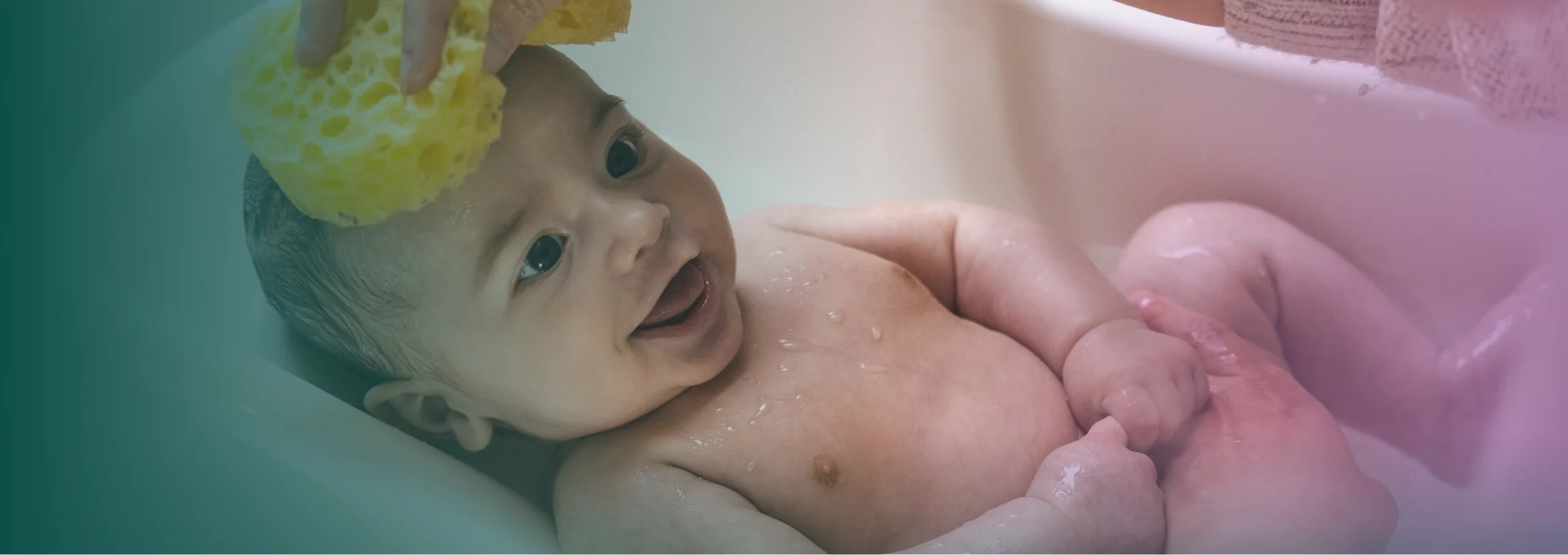
There’s no strict rule here, and different approaches all work fine. Bathing every night is a completely reasonable choice – many parents find it calming for both baby and parent, and it can become a soothing part of a bedtime routine that supports better sleep.
A couple of practical notes:
- Babies have spent nine months surrounded by fluid, so most take to water very naturally, especially if you start when they’re just a day or two old
- You can’t fully immerse a baby in water until the umbilical stump has fallen off – but a shallow bath with water gently poured or “lapped” over them works fine before that point
- If you wait too long to introduce bathing, some babies do develop more resistance to it – starting early tends to make it an easier, calmer routine long-term

The Bottom Line
Umbilical cord care is really just: clean, rinse, dry, and don’t rush the process. A red, slightly bumpy healing spot (granuloma) and even a small umbilical hernia are both normal and self-resolving. And there’s no single correct bathing frequency – nightly is fine, and starting early tends to make bath time a calmer routine overall.
FAQ: Umbilical Cord Care & Bathing
Is redness or bumpy tissue around the umbilical stump normal?
Yes – this is called a granuloma and is a normal part of the healing process, not an infection. It may occasionally spot a small amount of blood if rubbed by clothing, which also isn’t a concern on its own.
Should I use alcohol to help the umbilical cord stump dry faster?
Practices around this have changed over time. Check with your pediatrician for current guidance rather than relying on older routines.
Is a small bulge near my baby’s belly button a hernia?
Umbilical hernias are common and typically resolve on their own as the abdominal muscle wall closes, usually without needing treatment before around age five.
How often should I bathe my newborn, and when can I fully submerge them?
There’s no fixed rule – nightly bathing is fine and can support a calming bedtime routine. Full immersion should wait until the umbilical stump has fallen off; before that, a shallow bath with water poured gently over the baby works well.
Sign Up
Stay up to date on the latest news, articles and insights from Dana Cowles
Recently published

August 19, 2026
Newborn Reflexes Explained: What’s Normal in the First Weeks

August 19, 2026
Newborn Feeding, Honestly: Breast, Bottle, Schedules, and Solids

August 19, 2026
What Actually Happens During: Labor, Delivery, and Those First Few Minutes
A standout line or pull quote from the post appears here.
Attribution · Dana Cowles, DO