

Newborn Feeding, Honestly: Breast, Bottle, Schedules, and Solids
Feeding advice tends to arrive as absolutes - breast is best, formula is fine, feed every three hours, don't feed on demand. Real feeding is messier and more individual than any of that. Here's a grounded look at what actually matters.
Breastfeeding vs. Formula: Both Are Valid, Neither Is a Moral Test
Breastfeeding has real, specific advantages: it’s simple, requires no preparation, travels with you anywhere, and strengthens your baby’s immunity. It’s also genuinely uncomfortable at first for a lot of women – soreness in the early days is common, and alternating breasts and gradually building up time on the breast helps. A lot of women give up right at the point it was about to get easier. If you’re struggling in the first couple of weeks, a lactation counselor is worth calling – they’re patient, knowledgeable, and exist specifically to get you past that hump.
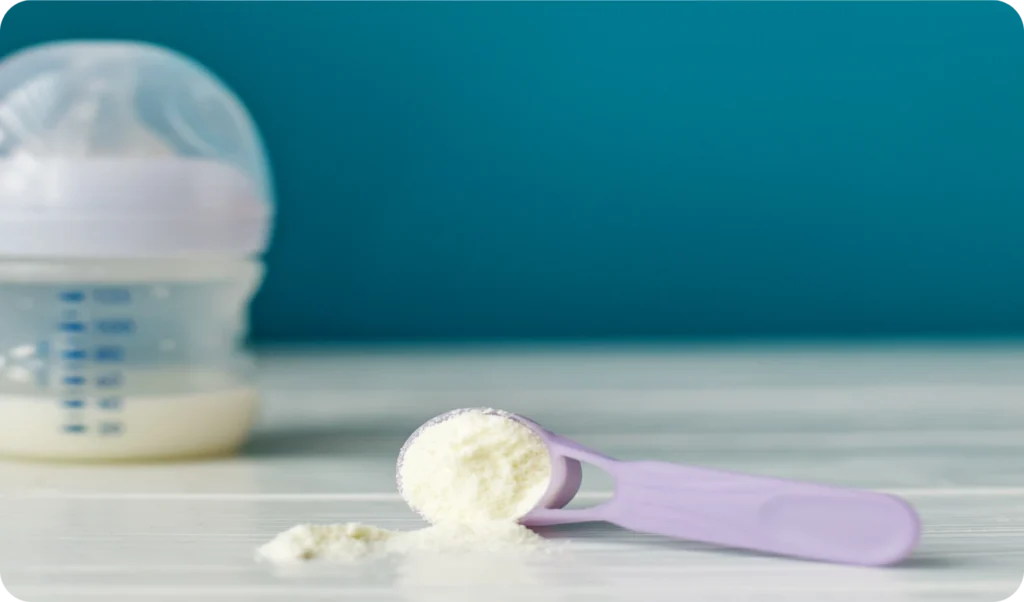
That said: not every woman can breastfeed, and that’s not a reflection on you as a mother. Formula is formulated to provide everything a growing baby needs except that immunity boost. If you’re formula feeding, there are a couple of practical notes:
- If you’re seeing constipation, look at the iron content – some formulas with less added iron cause fewer issues
- Grains, oats, or soy in a formula can also contribute to constipation in some babies
- Never dilute formula with extra water to stretch it further. This is dangerous – it can cause seizures and, in extreme cases, death. If cost is the barrier, formula assistance programs (like SNAP) exist specifically so you never have to make that trade-off. Always mix formula exactly to the label’s instructions.
Why “Feeding on a Schedule” Usually Backfires

A lot of pressure gets put on new parents to get their baby “on a schedule.” In practice, this tends to cause more problems than it solves. Babies know when they’re hungry – sticking to a rigid schedule instead of feeding on demand often leads to either overfeeding or a baby who’s still hungry and increasingly frustrated.
A rough, non-scheduled pattern worth knowing: babies who take about an ounce at a feeding tend to sleep about an hour afterward. As that increases to two ounces, sleep stretches to a couple of hours. Once a baby is reliably taking around six ounces, you’re often looking at a real six-hour stretch of sleep. This isn’t a target to engineer – it’s just a rough map of what’s happening as your baby naturally grows and takes more per feeding.
How to Spot Overfeeding

If your baby is spitting up frequently, it’s often a sign the stomach is being filled past what it can comfortably hold – in other words, overfeeding, not a problem with the baby. The fix isn’t to feed less overall; it’s to decrease the amount per feeding and increase frequency, giving the stomach time to settle in between.
It’s also worth knowing about the suck reflex: anything placed in a baby’s mouth triggers sucking, whether or not they’re actually still hungry. That means you can absolutely overfeed a baby who’s already full, just by continuing to offer the bottle or breast. If your baby pauses and looks comfortable and settled, that’s usually a real signal they’re done – not a cue to encourage “just a little more.”
There’s no universal number that’s “supposed” to be the right amount per feeding. Every baby’s satiety point is different, and that’s completely normal.
Starting Solids
When it’s time to introduce solid food (commonly discussed around six months, alongside your pediatrician’s guidance), rice cereal is often the recommended starting point since it’s among the least likely foods to trigger an allergic reaction.
The single most important rule: introduce one new food at a time. If you introduce several new foods together and your baby has a reaction, you won’t be able to tell which one caused it – and it’s much harder to backtrack from six new foods than to slowly build up from one.
The Bottom Line
There’s no single “correct” way to feed a baby – breast or bottle, by the ounce or by the clock. What matters is feeding on demand rather than by rigid schedule, watching for the overfeeding signals (frequent spit-up, a baby who pauses and looks satisfied), and introducing solids one at a time when the time comes.

FAQ: Newborn Feeding
How do I know if my baby is overfeeding?
Frequent spit-up or regurgitation is the main sign. The fix is usually to offer smaller amounts more frequently, rather than larger amounts spaced further apart.
Should I feed my baby on a strict schedule?
Feeding on demand, based on your baby’s own cues, tends to work better than a rigid schedule. Strict schedules often lead to overfeeding or a baby who’s still hungry between “assigned” feeding times.
Is it safe to dilute formula to make it last longer?
No – never dilute formula with extra water. It can cause serious harm, including seizures. If affording formula is a concern, formula assistance programs exist specifically to help.
What’s the best first food when starting solids?
Rice cereal is a common starting point because it’s among the least likely to cause an allergic reaction. Introduce only one new food at a time so you can identify the source if a reaction occurs.
Sign Up
Stay up to date on the latest news, articles and insights from Dana Cowles
Recently published

August 19, 2026
Newborn Reflexes Explained: What’s Normal in the First Weeks

August 19, 2026
Umbilical Cord Care and Bathing: A Simple, No-Panic Guide

August 19, 2026
What Actually Happens During: Labor, Delivery, and Those First Few Minutes
A standout line or pull quote from the post appears here.
Attribution · Dana Cowles, DO